
Can Taylor Swift Use Trademark Law to Help Fight Ai-Generated Deepfake Content?
Why Celebrities Cannot Wait for Congress to Address AI Deepfakes
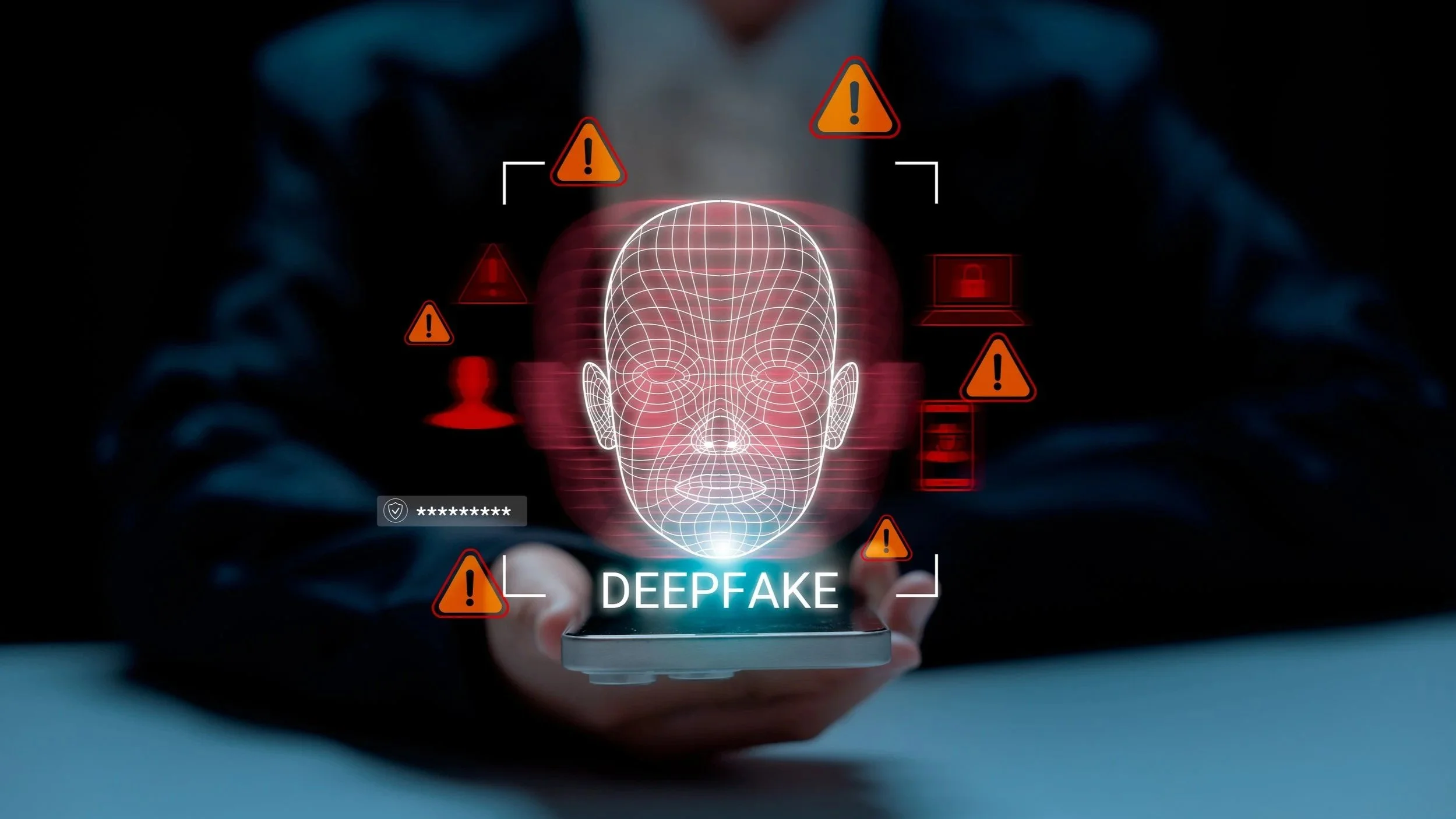
Artificial intelligence is here, and the threat is real. Not only is AI positioned to reshape employment structures across businesses by automating numerous tasks that human employees currently perform, it is sending shudders through the entertainment industry, where computer-generated images, deepfake videos, and replicated voices have the potential to deprive celebrities of their names, images, and likenesses—the key assets that provide their status. Congress has been slow to act, with legislation to address the issue sitting in committee despite apparent bipartisan support. Thus, celebrities and others impacted have had to rely on state causes of action that can vary widely from state to state in their applicability and scope.
Taylor Swift Turns to Federal Trademark Law to Protect Her Voice and Likeness
Just recently, Taylor Swift—unquestionably one of the biggest celebrities in the world—turned to the U.S. Patent & Trademark Office to seek protection of spoken sound marks and an image of her in concert under federal trademark law. While it is not uncommon for celebrities to seek federal trademark registration for their names or even logos that they use, seeking registration to protect voice and likeness themselves is relatively new. In the applications, Swift’s management company, TAS Rights Management, LLC, is seeking protection of two “sensory marks” consisting of Swift’s voice making short audio statements as well as Swift’s image in the form of a photograph of her performing in concert. Media observers were quick to assert that these filings were aimed at countering AI-generated deepfake content.[i] As discussed below, however, while there continues to be a need for uniform protections against non-consensual deepfakes, Swift’s trademark applications are unlikely to provide broad coverage against all forms of AI-generated misappropriation of her voice and likeness.
How AI-Generated Deepfake Technology Is Reshaping the Entertainment Industry
AI technology is now a part of everyday life, as there is virtually no industry that is not impacted by it in some way. In the entertainment field, AI-generated video and sound have improved to such a high quality that they are being used in movies, television shows, and other media content. When used with authorization, deepfake content can be used to supply characters or scenes that otherwise would not be possible. As an example, although Val Kilmer was unable to speak during the filming of Top Gun: Maverick due to a long battle with throat cancer that took his life in 2025, an AI-generated version of his voice was used for his character’s dialogue in the film. And this year, with the permission of his family, an AI version of Kilmer will star in As Deep as the Grave, a movie that Kilmer agreed to do years before his death.[ii]
The NO FAKES Act: A Federal Right of Publicity That Has Yet to Pass
The uses for AI-generated deepfake content are virtually limitless, and despite the positive examples described above, the majority of deepfake content is nonconsensual, unwanted by the persons whose likenesses and voices are misappropriated, harmful, and/or criminal. Yet despite recognition of the problem and bipartisan support, the “NO FAKES” Act has yet to receive traction in Congress since its first introduction in 2024. The Act, which would create a federal right of publicity, giving public figures and private individuals greater control over the digital duplication of their likenesses and voices, was reintroduced in April 2025 in both the Senate and House.[iii] No further action has been taken.
The Growing Threat of Nonconsensual AI Deepfakes Targeting Celebrities
With the explosion of AI technology in recent years, the ability to replicate a person’s likeness, voice, mannerisms, and other attributes is easy with countless tools available online. Deepfake videos have received considerable media attention as AI may allow users to create video content using the likenesses and voices of celebrities—often in scenes or situations to which the celebrities would not place themselves. Notable examples include AI generated deepfake videos of celebrities such as Steve Harvey, Tom Hanks, and Brad Pitt promoting internet scams.[iv] Bad actors have generated and distributed explicit deepfake videos depicting celebrities, including Swift.
Bipartisan Support and Free Speech Opposition to the NO FAKES Act
These nonconsensual uses of AI-generated deepfake content are among those that the NO FAKES Act seeks to address. Both the Senate and House versions are co-sponsored by senators and representatives of both political parties. The Act also is backed by celebrities including Martina McBride and Randy Travis as well industry groups like SAG–AFTRA, the RIAA and music labels, the Motion Picture Association, and the organization behind the Grammy awards.[v] There is some opposition, however, to the proposed legislation. Libertarians and free-speech advocates have lobbied against the NO FAKES Act, arguing that it is unnecessary, that it would lead to increased litigation, and that it would pose significant risks to free speech protected by the First Amendment.[vi] Currently, no action is scheduled for the proposed legislation.
Why State Laws Fall Short in Protecting Against AI Deepfake Misappropriation
Without a federal right-of-publicity law,[vii] celebrities and other victims of AI-generated deepfakes have asserted rights under a variety of state causes of action such as defamation, false light right of privacy, and right of publicity. But as in many areas, the availability of these claims varies from state to state, and none is a perfect fit for the use of a person’s voice or likeness in AI-generated content.
What Taylor Swift’s Trademark Applications Actually Cover
Taylor Swift’s trademark applications for her voice and image present the interesting question of whether the federal trademark laws can be used as a tool against nonconsensual deepfake content. If that is Swift’s intent, the scope of protection that can be achieved under the trademark laws is currently unclear. In particular, Swift’s applications to register “sensory marks” of her voice include her reading short passages that begin with introductory phrases like “HEY, IT’S TAYLOR SWIFT” or “HEY, IT’S TAYLOR,” and according to the applications, the mark consists of those spoken words.[viii] The application for the concert photo describes the mark as consisting of “a photograph of Taylor Swift holding a pink guitar, with a black strap and wearing a multi-colored iridescent bodysuit with silver boots. She is standing on a pink stage in front of a multi-colored microphone with purple lights in the background.”[ix] The application further states that the colors “pink, black, purple and silver [are] claimed as a feature of the mark.”[x]
How Trademark Counterfeiting Law Could Be Used Against AI Deepfakes
Given the descriptions in the applications, it does not appear that, even when registered, these marks will provide the broad protections for Swift’s voice and likeness against all AI-generated content that some had suggested. Still, they may prove invaluable in helping to stop certain types of deepfake or other unauthorized content. For example, if a deepfake video or audio were to use Swift’s voice saying “Hey, it’s Taylor” or “Hey, it’s Taylor Swift,” federal registration of her voice saying those phrases as service marks for Swift’s music services may provide additional rights under the anti-counterfeiting provisions of the trademark laws.
The Powerful Legal Remedies Available Under Federal Anti-Counterfeiting Law
Counterfeiting occurs when one uses a mark that is “identical with, or substantially indistinguishable from, a registered mark” in connection with the sale, offer for sale, or distribution of goods or services.[xi] In a counterfeiting case, the court may issue ex parte orders for seizure of good, records, and equipment used in connection with the counterfeiting activities.[xii] Thus, after registration of Swift’s voice marks, a deepfake video using Swift’s voice reciting “Hey, it’s Taylor” or “Hey, it’s Taylor Swift” purporting to sell goods or services—even as a scam—may constitute counterfeiting and give rise to the powerful remedies under the anti-counterfeiting laws.
Matthew McConaughey and the Rise of Celebrity Sound Mark Registrations
While not currently the norm, other celebrities have obtained federal registration covering their spoken catchphrases. In a notable example, the Patent & Trademark Office registered a sound mark for actor Matthew McConaughey reciting his iconic phrase, “Alright, Alright, Alright,” in connection with “downloadable audio-visual media content.”[xiii] With Swift’s applications, some have predicted that other celebrities will follow suit and file similar applications.
What Taylor Swift’s Trademark Strategy Means for the Future of AI Legislation
What impact, if any, these trademark applications have on AI-generated deepfake content remains to be seen. But given their narrow scope compared to the massive problem of deepfakes, it is clear that legislation is needed. That legislation may be some modified version of the NO FAKES Act, but until Congress actually takes up consideration of that bipartisan pending legislation, celebrities and other individuals will continue to struggle in their efforts to combat nonconsensual deepfake content.
For more information about AI law, see our technology law services practice page.
[i] M. Cerullo et al., “Taylor Swift files to trademark her voice and image amid rise in AI deepfakes,” CBS News, MoneyWatch (Apr. 28, 2026); A. Yang, “Taylor Swift files to trademark her voice and likeness in era of AI deepfakes,” NBC News (Apr. 27, 2026).
[ii] D. Weisholtz, “See AI-Generated Version of Val Kilmer in 1st Trailer for ‘As Deep as the Grave,’” NBC Today (Apr. 16, 2026).
[iii] Nurture Originals, Foster Art, and Keep Entertainment Safe (NO FAKES) Act of 2025, S. 1367, 119th Cong. (2025); H.R. 2794, 119th Cong. (2025).
[iv] H. Gold, “Celebrity AI deepfakes are flooding the internet. Hollywood is pushing Congress to fight back,” CNN (Mar. 8, 2025); J. Bilstein, “That’s Not Actually Tom Hanks Hocking ‘Miracle Cures and Wonder Drugs’ on the Internet,” Rolling Stone (Aug. 30, 2024).
[v] Recording Academy Press Release, “Artists Rally Behind the NO FAKES Act to Protect Against AI Misuse at Senate” (June 2, 2025); RIAA Press Release, “RIAA Supports NO FAKES Act as Senators Blackburn, Coons, Tillis, Klobuchar and Representatives Salazar, Dean, Moran, Balint & Bipartisan Colleagues Reintroduce Landmark Bill (Apr. 9, 2025); SAG–AFTRA Press Release, “SAG–AFTRA Advocates for the NO FAKES Act” (Oct. 24, 2025); MPA Remarks, “MPA Chairman and CEO Charles Rivkin’s Remarks at Press Conference for Reintroduction of the NO FAKES Act” (Apr. 9, 2025).
[vi] Sept. 6, 2024, Letter of Opposition to Sens. Chris Coons and Thom Tillis, sent by Re:Create, Ass’n of Research Libraries, American Library Ass’n, Computer & Communications Industry Ass’n, Center for Democracy & Technology, Electronic Frontier Foundation, Engine, Organization for Transformative Works, Public Knowledge, and R. Street Institute.
[vii] To its credit, in 2025, Congress did pass the “TAKE IT DOWN ACT,” which prohibits the online publication of nonconsensual intimate visual depictions of individuals and requires certain online content providers to implement a mechanism for removing, upon notice, such content. Pub. Law No. 119–12. After passing with almost unanimous support, President Trump signed the Act into law in May 2025.
[viii] Application Serial Nos. 99784979, 99784980.
[ix] Application Serial No. 99784977.
[x] Id.
[xi] 15 U.S.C. §§ 1116(d), 1127.
[xii] 15 U.S.C. § 1116(d)(1)(A).
[xiii] U.S. Trademark Reg. No. 7,995,852.
Klemchuk PLLC is a leading IP law firm based in Dallas, Texas, focusing on litigation, anti-counterfeiting, trademarks, patents, and business law. Our experienced attorneys assist clients in safeguarding innovation and expanding market share through strategic investments in intellectual property.
This article is provided for informational purposes only and does not constitute legal advice. For guidance on specific legal matters under federal, state, or local laws, please consult with our IP Lawyers.
© 2026 Klemchuk PLLC | Explore our services