
The Dallas Business Guide to Intellectual Property
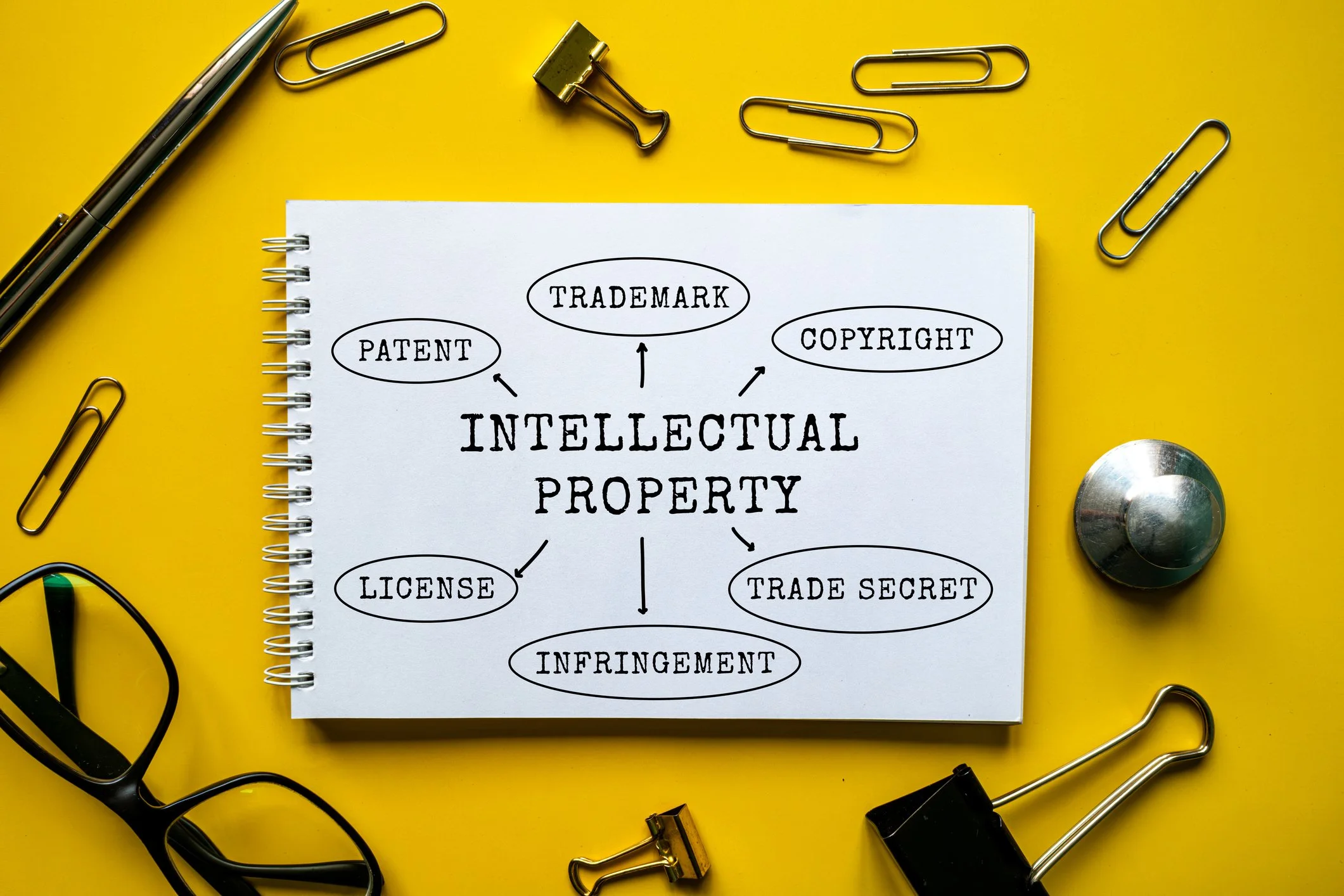
Innovation drives business growth. Whether it is a groundbreaking software platform, a recognizable brand, a proprietary manufacturing process, or an original work of creative expression, intellectual property is often among a company's most valuable assets. For many businesses, intellectual property represents the competitive advantage that separates them from every other company in the marketplace.
Today's business landscape is increasingly built on intangible assets. While factories, equipment, and inventory remain important, many of the world's most valuable companies derive much of their worth from patents, trademarks, copyrights, trade secrets, proprietary technology, customer relationships, and accumulated know-how. These assets often take years to develop but can sometimes be copied in weeks if they are not properly protected.
For businesses in Dallas and throughout Texas, intellectual property law is no longer reserved for Fortune 500 companies or Silicon Valley technology firms. Startups, software developers, manufacturers, healthcare companies, retailers, restaurants, engineering firms, marketing agencies, entrepreneurs, and family-owned businesses all rely on intellectual property to differentiate themselves in competitive markets.
Protecting these assets requires more than simply filing paperwork with a government agency. Effective intellectual property protection begins with understanding what intellectual property exists within a business, determining which legal protections are available, implementing procedures to preserve ownership, and developing a strategy for enforcement when rights are challenged.
This guide explains the major categories of intellectual property, how they work together, common mistakes businesses make, and how thoughtful planning can transform intellectual property from a legal necessity into a strategic business asset.
Part 1: Introduction to Intellectual Property
Why Intellectual Property Matters More Than Ever
Many business owners underestimate the value of their intellectual property because it cannot be touched or stored in a warehouse. Yet intangible assets often represent the majority of a company's value.
Consider some of the assets that create long-term business value:
Brand recognition
Product names
Software code
Proprietary manufacturing methods
Customer data
Technical documentation
Marketing content
Product designs
Confidential business processes
Training materials
Artificial intelligence models
Algorithms
Licensing agreements
Each of these assets may qualify for one or more forms of legal protection.
For startups, intellectual property can be instrumental in attracting investors. Venture capital firms and private equity groups frequently evaluate a company's IP portfolio before investing because ownership of key technology or branding can significantly affect valuation and long-term growth potential.
Established businesses also benefit from strategic intellectual property management. Strong IP portfolios create barriers to entry for competitors, provide leverage in negotiations, support licensing opportunities, strengthen merger and acquisition transactions, and reduce legal risk.
Businesses that delay protecting their intellectual property often discover that correcting mistakes is significantly more expensive than preventing them. A company that invests heavily in branding before conducting a trademark search may ultimately need to rebrand. A software developer who publicly discloses an invention before filing a patent application may lose important patent rights. A business that fails to require employees and contractors to assign ownership of intellectual property may later discover it does not own critical assets it paid to develop.
Intellectual property should therefore be viewed as a business strategy—not exclusively a legal issue.
Understanding the Four Primary Types of Intellectual Property
Although intellectual property law includes several specialized areas, most businesses encounter four primary categories:
Patents
Trademarks
Copyrights
Trade Secrets
Each protects different types of assets, and understanding the differences helps businesses make informed decisions about protection.
Patents
Patents protect inventions. In exchange for publicly disclosing how an invention works, the government grants the patent owner the exclusive right to prevent others from making, using, selling, offering to sell, or importing the patented invention for a limited period.
Patents are especially valuable because they protect functional innovations rather than merely branding or expression. A patented invention may involve a new medical device, manufacturing process, chemical formulation, software-implemented technology, mechanical component, or consumer product.
Three primary types of patents are available in the United States:
Utility Patents
Utility patents protect new and useful processes, machines, manufactures, compositions of matter, and improvements thereof. Most patent applications fall into this category.
Examples include:
Medical technologies
Artificial intelligence systems
Manufacturing equipment
Mechanical inventions
Chemical compounds
Electronic devices
Business methods in limited circumstances
Software innovations meeting patent eligibility requirements
Design Patents
Design patents protect the ornamental appearance of products rather than how they function.
Examples include:
Consumer electronics
Furniture
Medical devices
Product packaging
Jewelry
Sporting equipment
Vehicle components
As consumer purchasing decisions increasingly depend upon visual appearance, design patents have become an important complement to trademarks and utility patents.
Plant Patents
Plant patents protect new varieties of asexually reproduced plants. While less common than utility or design patents, they remain valuable in agriculture and horticulture industries.
Trademarks
While patents protect inventions, trademarks protect brands.
A trademark identifies the source of goods or services and distinguishes one business from another. Strong trademarks enable consumers to recognize products they trust while allowing businesses to build goodwill over time.
Trademarks may include:
Company names
Product names
Logos
Slogans
Taglines
Colors in limited circumstances
Sounds
Packaging
Product configurations
Trade dress
Unlike patents, trademark rights can potentially last indefinitely, provided the mark remains in use and required maintenance filings are completed.
Many businesses mistakenly believe trademark registration creates the brand. In reality, trademark rights often begin through use in commerce, while federal registration significantly expands and strengthens those rights.
Selecting a strong trademark from the beginning is one of the most important business decisions a company can make. Distinctive trademarks generally receive broader protection and are easier to enforce than descriptive or generic terms.
Copyrights
Copyright law protects original works of authorship that are fixed in a tangible medium.
Businesses create copyrightable material every day, often without realizing it.
Examples include:
Website content
Software code
Marketing materials
Architectural drawings
Product photographs
Videos
Podcasts
Training manuals
Technical documentation
Engineering drawings
White papers
Blog articles
Advertising copy
Unlike patents, copyright protection generally arises automatically upon creation. However, federal registration provides substantial additional benefits, including the ability to pursue statutory damages and attorney's fees in many infringement actions.
Trade Secrets
While patents, trademarks, and copyrights generally involve some form of legal registration or public record, trade secrets derive their value from remaining confidential. Trade secret protection can apply to information that has independent economic value because it is not generally known and is subject to reasonable efforts to maintain its secrecy.
Trade secrets may include:
Manufacturing processes
Source code
Artificial intelligence models
Proprietary algorithms
Product formulas
Customer lists
Pricing models
Vendor information
Marketing strategies
Sales methodologies
Business plans
Research and development
Internal workflows
Financial models
Product roadmaps
Trade secret protection does not require registration with a government agency. Instead, businesses must take reasonable steps to maintain the confidentiality of qualifying information, such as through confidentiality agreements, access controls, cybersecurity practices, and internal policies.
As long as the information remains confidential and continues to meet the requirements for protection, trade secret rights can last indefinitely. However, if the information becomes publicly known or loses its confidential nature, trade secret protection may be lost.
Part 2: Intellectual Property and Business
Choosing the Right Form of Intellectual Property Protection
One of the most common misconceptions among business owners is that every innovation should be patented or every business asset fits neatly into a single category of intellectual property. In reality, many valuable assets qualify for multiple forms of protection, while others are better protected through one strategy rather than another.
Understanding these distinctions helps businesses distribute resources more effectively and avoid costly mistakes.
Patent or Trade Secret?
One of the most important strategic decisions involves choosing between patent protection and trade secret protection.
A patent grants exclusive rights for a limited period, but only after the invention is publicly disclosed. A trade secret requires no government registration and can potentially last forever—but only if confidentiality is maintained.
A business might favor a patent when:
Competitors can easily reverse engineer the invention.
Public disclosure is inevitable.
Strong exclusivity is needed to attract investors.
The technology is likely to have a long commercial life.
Trade secret protection may be preferable when:
The innovation cannot be easily reverse engineered.
Confidentiality can realistically be maintained.
The technology changes rapidly.
Long-term secrecy provides greater value than a limited patent monopoly.
Many successful companies employ both strategies simultaneously, patenting certain innovations while preserving others as confidential know-how.
Trademark or Copyright?
Businesses also frequently confuse trademark and copyright protection.
A trademark protects the source of goods or services. Its purpose is to prevent consumer confusion.
Copyright protects original creative expression.
For example:
A company logo may receive copyright protection as original artwork while simultaneously functioning as a trademark because consumers associate it with a particular company.
Similarly:
Product packaging may qualify for copyright.
The brand name may function as a trademark.
The product design may receive design patent protection.
Unique packaging appearance may constitute trade dress.
These overlapping protections often provide significantly stronger legal protection than relying upon a single type of intellectual property.
Building Layers of Protection
Sophisticated businesses rarely rely on one form of intellectual property. Instead, they build multiple layers of protection around valuable products and services.
Consider a software company.
The software itself may be protected through copyright.
The company name is protected through trademark.
The underlying technology may be patented.
The source code and development methodology may remain trade secrets.
The user interface may receive design patent protection.
The customer database may qualify as a trade secret.
License agreements further strengthen these protections through contract law.
Together, these rights create overlapping legal barriers that make copying significantly more difficult.
This layered approach often provides substantially greater business value than any single registration.
Intellectual Property Is a Business Strategy
Many businesses first contact an intellectual property lawyer only after a problem arises:
Someone copied their product.
A cease-and-desist letter arrived.
An employee left with confidential information.
An investor requested proof of IP ownership.
A competitor filed a similar trademark.
A new product launch uncovered an existing patent.
By that point, available options are often more limited and more expensive.
A proactive intellectual property strategy begins much earlier.
Rather than asking, "How do we protect this invention?" successful companies ask broader questions:
Which assets create our competitive advantage?
Which innovations should be patented?
Which information should remain confidential?
Which brands deserve federal registration?
Which copyrights should be registered?
Which technologies should be licensed?
Where are our greatest risks?
These questions connect intellectual property decisions directly to business objectives.
An effective IP strategy evolves alongside the business. As companies introduce new products, expand internationally, hire employees, acquire competitors, or seek outside investment, their intellectual property portfolio should mature as well.
When managed strategically, intellectual property becomes more than a legal safeguard—it becomes a business asset that can increase enterprise value, support financing, create licensing opportunities, and strengthen a company's market position.
Common Intellectual Property Mistakes Businesses Make
Many intellectual property disputes are preventable. The following mistakes appear repeatedly across businesses of every size—from startups to established companies.
Launching a Brand Before Conducting a Trademark Search
One of the most expensive mistakes occurs when businesses invest heavily in branding before determining whether someone else already owns similar trademark rights.
Changing a company name after launching a website, ordering signage, printing marketing materials, and building customer recognition can be far more expensive than performing a comprehensive clearance search at the beginning.
Trademark clearance should generally occur before significant investments are made in branding.
Publicly Disclosing an Invention Too Early
Inventors are often eager to demonstrate new technology to customers, investors, or industry partners.
However, public disclosure can greatly affect patent rights, particularly outside the United States, where many jurisdictions require absolute novelty before filing.
Businesses should evaluate patent strategy before exhibiting products at trade shows, publishing technical papers, posting demonstrations online, or publicly discussing new inventions.
Failing to Secure Intellectual Property Ownership
Ownership problems frequently arise because businesses assume they automatically own intellectual property created by employees, contractors, consultants, or software developers.
While many employee-created works are owned by employers under applicable law, independent contractor relationships often require written assignment agreements. Without clear contractual provisions, ownership disputes can emerge years later—often during financing rounds, acquisitions, or litigation.
Every business should periodically review employment agreements, contractor agreements, invention assignment provisions, and confidentiality obligations to ensure that intellectual property ownership is clearly documented.
Treating Intellectual Property as a One-Time Project
Protecting intellectual property is not a single event. Patents require maintenance fees. Trademarks require continued use and periodic renewals. Trade secrets require ongoing confidentiality measures. Copyright portfolios expand as businesses create new content.
Organizations that treat intellectual property as an ongoing business process are generally better positioned to preserve and maximize the value of their intangible assets over time.
Waiting Until Litigation Is Imminent
Perhaps the costliest mistake is waiting until a dispute arises before evaluating intellectual property rights.
Businesses that keep organized records, monitor their brands, document innovation, and periodically review their IP portfolios are typically in a stronger position to enforce their rights—or defend against claims—when conflicts occur.
When Protection Isn't Enough
Even the strongest intellectual property portfolio cannot eliminate every dispute. As markets become more competitive and technology evolves more rapidly, conflicts over patents, trademarks, copyrights, trade secrets, software, and branding are becoming increasingly common.
When those disputes arise, businesses must make strategic decisions that go beyond the legal merits of the case. Questions about timing, business objectives, costs, licensing opportunities, competitive impact, and risk tolerance often shape the outcome as much as the underlying law.
The next section examines intellectual property litigation in depth, including the types of disputes businesses face, how litigation typically unfolds, and the strategic considerations that influence whether a case proceeds to trial, settles through negotiation, or is resolved through alternative dispute resolution.
Part 3: Intellectual Property Litigation
Protecting Competitive Advantage
Businesses rarely set out to become involved in intellectual property litigation. Most companies would prefer to devote their time and resources to developing new products, serving customers, and growing their business. Yet when valuable intellectual property is copied, misappropriated, or challenged, litigation may become necessary to preserve the competitive advantages that took years to build.
Intellectual property litigation is about far more than enforcing legal rights. Every dispute presents business decisions that can affect customer relationships, product launches, investor confidence, licensing opportunities, and long-term market position. The strongest legal argument is not always the strongest business strategy, and the best resolution is not always a courtroom victory.
For that reason, experienced intellectual property litigators begin by understanding the client's business objectives before developing a legal strategy. Questions such as "What outcome best serves the business?" and "How will this dispute affect future growth?" often shape litigation decisions as much as the underlying facts.
Some disputes require immediate action to stop ongoing harm. Others are better resolved through negotiation, licensing, mediation, or carefully structured settlement agreements. Understanding the available options allows businesses to make informed decisions rather than reacting under pressure.
Although every dispute is unique, most intellectual property litigation falls into four primary categories: patent litigation, trademark litigation, copyright litigation, and trade secret litigation.
Patent Litigation
Patent litigation typically involves allegations that one party has made, used, sold, offered for sale, or imported technology that infringes another party's patent rights. These disputes often involve complex products, sophisticated engineering, and detailed analysis of patent claims.
Unlike many other business disputes, patent litigation frequently requires the court to interpret highly technical language contained within patent claims. That process often determines whether infringement exists and can considerably influence the outcome of the case.
Patent disputes arise in many industries, including:
Software and SaaS platforms
Artificial intelligence technologies
Medical devices
Consumer electronics
Telecommunications
Manufacturing equipment
Semiconductor technologies
Energy systems
Aerospace
Automotive technologies
Patent litigation generally involves more than determining whether two products look similar. Courts examine whether the accused product or process includes each element of one or more asserted patent claims. Expert witnesses often play an important role in explaining technical issues to judges and juries.
Businesses involved in patent litigation must also evaluate broader strategic considerations, including:
The strength and validity of the patent
Available prior art
Potential design-around opportunities
Business interruption
Competitive positioning
Licensing possibilities
Insurance coverage
Litigation costs
International implications
Because patent cases frequently involve substantial financial exposure, early case assessment is often one of the most valuable investments a business can make.
Trademark Litigation
Trademark litigation focuses on protecting brands and preventing consumer confusion.
Unlike patents, trademarks protect the goodwill associated with a company's products and services. A successful trademark often represents years (or decades) of investment in customer relationships, advertising, and reputation.
Trademark disputes commonly involve allegations of:
Likelihood of consumer confusion
Counterfeiting
Trademark dilution
False designation of origin
False advertising
Unfair competition
Trade dress infringement
Courts evaluating trademark disputes typically consider multiple factors rather than relying upon a single test. Similarity of the marks, relatedness of the goods or services, channels of trade, consumer sophistication, evidence of actual confusion, and the strength of the trademark may all influence the analysis.
Modern trademark disputes increasingly extend beyond traditional storefronts. Businesses now monitor and enforce their rights across:
E-commerce marketplaces
Social media platforms
Domain names
Mobile applications
Online advertising
Search engine marketing
Influencer campaigns
Artificial intelligence-generated content
As businesses expand digitally, protecting a brand often requires coordinated legal, technical, and business strategies rather than litigation alone.
Copyright Litigation
Nearly every modern business creates copyrightable works, whether intentionally or not.
Websites, software, photographs, videos, marketing materials, architectural drawings, training manuals, podcasts, technical documentation, and digital media all may qualify for copyright protection.
Copyright litigation often involves allegations that protected expression, not purely ideas, has been copied without authorization.
Common disputes include:
Software copying
Website content
Marketing materials
Product photography
Graphic design
Video production
Architectural works
Technical documentation
Educational materials
Music
Publishing
One of the more significant developments in recent years involves the increasing intersection of copyright law and artificial intelligence. Questions regarding AI-generated works, machine learning training data, software-assisted content creation, and ownership of AI-assisted creative works continue to evolve rapidly.
Businesses that regularly create original content should understand that registration often provides important procedural advantages in litigation, including eligibility for statutory damages and attorney's fees in many cases.
Because digital content can be copied and distributed almost instantly, early investigation and evidence preservation often become important components of copyright disputes.
Trade Secret Litigation
Trade secret litigation often moves faster than other forms of intellectual property litigation because the confidential information at issue may lose much of its value if disclosure continues unchecked.
These disputes frequently arise after:
Employee departures
Executive transitions
Failed business negotiations
Vendor disputes
Joint ventures
Acquisitions
Cybersecurity incidents
Data breaches
Unlike patent litigation, trade secret cases generally require businesses to establish that the information actually qualifies as a trade secret and that reasonable measures were taken to maintain its secrecy.
Courts often evaluate questions such as:
Was the information confidential?
Did it provide economic value?
Who had access?
Were confidentiality agreements used?
Were security procedures followed?
Was the information improperly acquired or disclosed?
Many trade secret disputes involve requests for temporary restraining orders or preliminary injunctions designed to prevent further disclosure while litigation proceeds.
Because confidential information can spread quickly once disclosed, speed often becomes one of the most important strategic considerations.
False Advertising and Unfair Competition
Not every intellectual property dispute involves a registered patent, trademark, or copyright.
Businesses may also become involved in disputes concerning false advertising, unfair competition, deceptive marketing practices, and misrepresentations about products or services.
These cases may involve allegations such as:
False product claims
Misleading comparative advertising
Passing off products as another company's goods
False endorsements
Misappropriation of goodwill
Misleading online marketing
Product disparagement
Unfair competitive practices
As digital marketing has grown more sophisticated, businesses need to carefully evaluate advertising claims across websites, social media, search engine marketing campaigns, influencer partnerships, and AI-generated content.
Protecting brand reputation often entails addressing these issues quickly before inaccurate information gains widespread attention.
The Business Decisions Behind Every Lawsuit
One of the biggest misconceptions about litigation is that every dispute should immediately proceed to trial.
In reality, successful intellectual property litigation often means evaluating multiple paths toward resolution.
Depending on the circumstances, businesses may consider:
Early settlement discussions
Licensing agreements
Business resolutions
Mediation
Arbitration
Consent agreements
Coexistence agreements
Injunctive relief
Declaratory judgment actions
Full trial
Each option presents different costs, risks, timelines, and business implications.
For example, a startup preparing for investment may prioritize obtaining a prompt injunction to preserve market exclusivity. An established manufacturer may instead prefer a licensing arrangement that avoids years of litigation while generating ongoing revenue. Two companies operating in different markets may find that a coexistence agreement protects their respective brands without requiring a court to resolve the dispute.
The appropriate strategy depends not only on the legal merits of the case, but also on the client's broader business objectives.
Intellectual Property Litigation in the Northern District of Texas
Many intellectual property disputes involving Dallas businesses are litigated in the United States District Court for the Northern District of Texas. Depending on the nature of the claims and the parties involved, cases may also be filed in other federal courts or, in certain circumstances, Texas state courts.
Federal intellectual property litigation is governed by detailed procedural rules, scheduling orders, and evidentiary requirements. Successful case management often requires careful coordination of document preservation, expert witnesses, discovery, dispositive motions, and trial preparation.
Businesses involved in litigation should also understand that many disputes begin long before a complaint is filed. Investigations, preservation of evidence, demand letters, negotiations, and strategic planning can strongly influence the course of a dispute.
Looking Beyond the Lawsuit
While litigation receives much of the attention in intellectual property disputes, many successful outcomes are achieved outside the courtroom.
A thoughtfully negotiated license can transform a competitor into a business partner. Mediation may preserve valuable commercial relationships while avoiding years of litigation. A carefully drafted settlement agreement can provide certainty, reduce costs, and allow both parties to refocus on innovation and growth.
For many businesses, the ultimate objective is not simply winning a lawsuit—it is protecting the value of their intellectual property in a way that supports long-term business success.
Part 4: Frequently Asked Questions About Intellectual Property Law
Businesses often encounter similar questions as they develop new products, launch brands, hire employees, expand internationally, or face intellectual property disputes. While every situation is unique, the following answers address many of the issues that arise most frequently.
What is intellectual property?
Intellectual property ("IP") refers to creations of the mind that are protected by law. Intellectual property can include inventions, brands, creative works, confidential business information, software, designs, and proprietary technology.
The four principal forms of intellectual property protection are patents, trademarks, copyrights, and trade secrets. Each protects different types of business assets and serves different strategic purposes.
Which type of intellectual property protection do I need?
The answer depends on what you are trying to protect.
A new invention may qualify for patent protection. A company name or logo may be protected through trademark law. Software code, photographs, videos, and written materials are generally protected by copyright. Confidential business information may qualify as a trade secret if appropriate safeguards are maintained.
Many businesses use several forms of intellectual property protection simultaneously because different legal rights can apply to the same product or service.
When should a business begin thinking about intellectual property?
Earlier than most companies do.
Intellectual property decisions are often made before a product is introduced to the marketplace. Trademark clearance searches should generally occur before investing in branding. Patent strategy should be considered before public disclosure of an invention. Confidentiality procedures should be established before sensitive information is shared with employees, contractors, vendors, or potential business partners.
Waiting until a dispute arises often limits available options.
Does every invention need a patent?
No. Some innovations are better protected as trade secrets rather than patents.
Obtaining a patent requires public disclosure of the invention, while trade secrets remain valuable only so long as they remain confidential. The appropriate strategy depends on factors such as reverse engineering risks, product life cycles, competitive advantages, and long-term business objectives.
What is the difference between a trademark and a copyright?
Although the two are sometimes confused, they protect different things.
A trademark identifies the source of goods or services. It protects brands.
A copyright protects original creative expression.
For example, the artistic design of a logo may be protected by copyright, while the same logo also functions as a trademark that identifies the company offering goods or services.
Should I register my trademark if I already use it?
Federal registration provides considerable advantages beyond common law rights created through use.
Registration may provide nationwide priority, public notice of ownership, access to federal courts, stronger remedies in infringement actions, and additional enforcement tools through online marketplaces and U.S. Customs.
Businesses planning to grow beyond their immediate geographic market often benefit from federal trademark registration.
How long does intellectual property protection last?
The answer depends upon the type of intellectual property.
Utility patents generally last twenty years from the filing date, subject to maintenance requirements.
Design patents generally last fifteen years from issuance.
Trademark rights can potentially continue indefinitely if the mark remains in use and maintenance requirements are satisfied.
Copyright protection generally extends for decades after the author's death or, for many corporate works, for a statutory period measured from publication or creation.
Trade secret protection can continue indefinitely if confidentiality is maintained.
What happens if someone copies my product or brand?
The appropriate response depends on the facts.
Some situations may warrant monitoring, while others require immediate investigation. Businesses often begin by evaluating the scope of the alleged infringement, preserving evidence, assessing available legal rights, and considering business objectives before deciding whether to pursue negotiations, licensing, mediation, or litigation.
Not every dispute requires a lawsuit, but delaying action can sometimes make enforcement more difficult.
Can intellectual property disputes be resolved without going to court?
Yes. Many disputes are resolved through negotiation, licensing, mediation, coexistence agreements, or other business solutions without proceeding to trial.
Alternative dispute resolution can reduce costs, preserve business relationships, protect confidential information, and provide greater flexibility than traditional litigation.
Choosing the appropriate dispute resolution strategy depends on the parties, the intellectual property involved, and the client's long-term objectives.
What intellectual property issues arise when employees leave?
Employee departures frequently create questions involving confidential information, customer relationships, software, inventions, and ownership of intellectual property developed during employment.
Businesses should ensure that employment agreements, invention assignment agreements, confidentiality provisions, and exit procedures clearly address intellectual property ownership and post-employment obligations.
Proactive planning is generally more effective than attempting to resolve ownership questions after a dispute develops.
Can contractors own intellectual property they create?
Sometimes. Unlike many employee-created works, intellectual property created by independent contractors is not automatically owned by the hiring company.
Written agreements addressing ownership, assignment, confidentiality, and licensing are often critical to avoiding future conflicts.
Businesses that regularly engage software developers, designers, engineers, marketing professionals, or consultants should periodically review their contractor agreements.
How does artificial intelligence affect intellectual property?
Artificial intelligence presents new and evolving intellectual property questions.
Businesses increasingly encounter issues involving ownership of AI-generated content, copyright protection, training data, machine learning models, software licensing, confidential algorithms, and AI-assisted invention.
Because the legal landscape continues to evolve, organizations using artificial intelligence should periodically review their intellectual property strategies to account for emerging legal developments.
What is an intellectual property audit?
An intellectual property audit is a systematic review of a company's intellectual property assets.
The audit often identifies existing patents, trademarks, copyrights, trade secrets, software, licenses, agreements, and confidential information, while evaluating ownership, maintenance requirements, and potential legal risks.
Many businesses perform intellectual property audits before raising capital, acquiring another company, launching new products, or expanding internationally.
Why is intellectual property important during mergers and acquisitions?
Buyers frequently view intellectual property as one of the most valuable assets included in an acquisition.
Well-organized intellectual property portfolios help streamline due diligence, reduce transaction risk, support valuation, and provide greater confidence that the acquired business actually owns the assets being purchased.
Incomplete ownership records or unresolved disputes may complicate negotiations or reduce purchase price.
Do small businesses need intellectual property protection?
Absolutely. Intellectual property protection is not limited to large corporations.
Many small businesses rely heavily on their brand reputation, proprietary processes, customer relationships, software, marketing materials, or innovative products.
Protecting those assets early often costs significantly less than attempting to recover them after problems develop.
Part 5: Intellectual Property as a Business Asset
The most successful companies rarely view intellectual property as a collection of legal registrations. Instead, they manage intellectual property as a strategic business asset that supports innovation, strengthens competitive advantages, generates revenue, and increases enterprise value.
Every patent application, trademark registration, copyright portfolio, and trade secret policy should support broader business objectives.
For some companies, intellectual property creates barriers that discourage competitors from entering the market. For others, it becomes a source of recurring revenue through licensing, strategic partnerships, or technology transfers. In merger and acquisition transactions, a well-managed intellectual property portfolio may significantly increase business value and reduce transaction risk.
As businesses grow, their intellectual property strategy should evolve alongside them. New products, acquisitions, international expansion, employee growth, software development, and emerging technologies all create opportunities and risks that require thoughtful planning.
Businesses that periodically evaluate their intellectual property portfolio are often better positioned to identify valuable assets, eliminate unnecessary expenses, strengthen legal protections, and align their IP investments with long-term business goals.
Intellectual Property Due Diligence
Intellectual property due diligence is often one of the most important aspects of a business transaction.
Whether a company is raising capital, acquiring another business, entering into a joint venture, or preparing for sale, investors and buyers typically want to understand what intellectual property exists, who owns it, whether it has been properly protected, and whether any disputes could affect future value.
The due diligence process frequently examines:
Patent portfolios
Trademark registrations
Copyright ownership
Trade secret protection procedures
Employment agreements
Contractor agreements
Invention assignment agreements
Software licenses
Open-source software usage
Domain names
Licensing agreements
Pending litigation
Government filings
Chain of title documentation
One overlooked issue can significantly delay, or even derail, a transaction.
For example, if software developers were engaged as independent contractors without written intellectual property assignment agreements, the company purchasing the business may question whether the seller actually owns the software it intends to sell.
Similarly, missing trademark registrations, unresolved infringement claims, or inadequate trade secret procedures can create uncertainty that affects valuation and negotiating leverage.
Conducting periodic internal intellectual property audits often makes future due diligence substantially smoother and reduces the likelihood of unpleasant surprises during important business transactions.
Intellectual Property Licensing
Not every intellectual property strategy involves preventing others from using valuable technology or branding.
In many situations, licensing intellectual property allows businesses to expand into new markets, generate recurring revenue, or commercialize innovations without manufacturing products themselves.
Licensing arrangements can involve virtually every category of intellectual property, including:
Patents
Trademarks
Copyrights
Software
Trade secrets
Manufacturing processes
Product designs
Brand names
Educational materials
Proprietary technology
Well-structured licensing agreements typically define:
Scope of rights
Geographic territory
Exclusivity
Royalty calculations
Performance obligations
Quality control standards
Confidentiality
Improvements
Ownership of derivative works
Termination rights
Licensing also allows businesses to resolve disputes creatively.
Rather than engaging in years of litigation, parties sometimes determine that licensing creates greater value than continued conflict. A negotiated license may allow both businesses to pursue commercial opportunities while avoiding uncertainty associated with trial.
Because licensing agreements often shape long-term business relationships, they should be drafted with careful attention to both legal rights and practical business considerations.
Technology, Software, and Artificial Intelligence
Technology companies face intellectual property issues that often extend beyond traditional patents and trademarks.
Modern software businesses frequently rely upon multiple forms of intellectual property protection simultaneously.
A single software platform may involve:
Copyrighted source code
Patentable innovations
Proprietary algorithms
Trade secrets
Registered trademarks
User interface designs
Confidential databases
Licensing agreements
API documentation
Artificial intelligence models
The rapid evolution of cloud computing, software-as-a-service (SaaS), artificial intelligence, and machine learning has created new legal questions that continue to develop through legislation and court decisions.
Businesses increasingly evaluate issues such as:
Ownership of AI-generated content
Protection of machine learning models
Training data rights
Software licensing
Open-source compliance
API usage
Data ownership
Customer-generated content
Cloud infrastructure agreements
Software escrow arrangements
Artificial intelligence has accelerated innovation while introducing significant uncertainty regarding ownership, infringement, licensing, and regulatory compliance.
Companies developing or deploying AI technologies should consider intellectual property issues early in the development process rather than after products reach the marketplace.
Intellectual Property in Mergers and Acquisitions
In many business acquisitions, intellectual property represents one of the primary assets being purchased. Buyers are not simply acquiring equipment or customer contracts; they are acquiring competitive advantages.
During acquisitions, intellectual property often influences:
Purchase price
Representations and warranties
Indemnification provisions
Escrow amounts
Closing conditions
Transition planning
Future licensing rights
Questions commonly addressed during IP due diligence include:
Does the company actually own its intellectual property?
Are all patents properly maintained?
Have trademarks been renewed?
Do employees have signed invention assignment agreements?
Are important trade secrets adequately protected?
Are software licenses transferable?
Is open-source software creating unexpected obligations?
Have there been prior infringement claims?
These questions become increasingly important as transaction values increase.
Businesses that maintain organized intellectual property portfolios generally experience fewer delays during acquisitions and may command stronger valuations.
International Intellectual Property Protection
Today's businesses frequently operate across international markets, even when they begin as local companies.
A Dallas software company may serve customers worldwide. An e-commerce business may sell products internationally from its first day of operation. Manufacturing relationships often involve suppliers located in multiple countries.
As businesses expand internationally, intellectual property strategies frequently become more complex.
Issues may include:
Foreign patent filings
International trademark registrations
Customs enforcement
Counterfeit products
Foreign manufacturing agreements
International licensing
Technology transfers
Cross-border confidentiality
International copyright protection
Because intellectual property laws differ from country to country, businesses should evaluate international filing strategies before expanding into foreign markets.
Waiting until products become successful internationally may result in missed opportunities to obtain protection in key jurisdictions.
Intellectual Property Across Industries
Although intellectual property law applies broadly across industries, every sector presents unique challenges.
Technology and Software
Technology companies often rely upon a combination of patents, copyrights, trade secrets, licensing agreements, and trademarks to protect software, cloud platforms, mobile applications, artificial intelligence systems, and proprietary algorithms.
Manufacturing
Manufacturers frequently protect innovative products through utility patents, design patents, trade secrets, supplier agreements, and process documentation while managing risks associated with overseas production.
Healthcare and Medical Devices
Healthcare businesses often manage complex patent portfolios alongside regulatory requirements, licensing agreements, research collaborations, and confidential clinical information.
Consumer Products
Consumer brands typically emphasize trademarks, trade dress, design patents, copyrights, online brand enforcement, and counterfeit prevention to preserve customer goodwill.
Food and Beverage
Food companies often combine trademarks with confidential recipes, manufacturing processes, packaging design, and branding strategies to build long-term competitive advantages.
Professional Services
Consulting firms, engineering companies, accounting firms, and marketing agencies frequently protect proprietary methodologies, educational materials, software, customer relationships, and confidential business information.
Innovation Requires Ongoing Attention
Intellectual property protection is rarely a one-time project. As businesses introduce new products, enter new markets, hire employees, adopt artificial intelligence, develop software, or acquire competitors, their intellectual property portfolio should continue to evolve.
Regular portfolio reviews help businesses identify opportunities to strengthen protection, retire obsolete assets, update ownership records, evaluate licensing opportunities, and reduce unnecessary legal risks.
Companies that treat intellectual property as a dynamic business asset are often better positioned to innovate with confidence while protecting the investments that drive future growth.
Building a Stronger Intellectual Property Strategy
Innovation rarely happens by accident.
It is the result of creativity, persistence, investment, and the willingness to solve difficult problems. Whether developing new technologies, building recognizable brands, creating original content, or refining proprietary business processes, companies invest substantial time and resources in creating assets that distinguish them from their competitors.
Those assets deserve thoughtful protection.
Intellectual property law provides a framework for safeguarding innovation, but effective protection requires more than obtaining registrations or responding to disputes as they arise. It involves aligning legal strategy with business objectives, anticipating future challenges, maintaining valuable rights, and making informed decisions throughout the life of a business.
For companies throughout Dallas, Texas, and beyond, intellectual property is often among their most valuable assets. Understanding how patents, trademarks, copyrights, trade secrets, licensing, and litigation work together allows business leaders to make better decisions—not only when problems occur, but long before they arise.
Whether your business is launching its first product, expanding into new markets, acquiring technology, preparing for investment, or protecting decades of innovation, a well-planned intellectual property strategy can help preserve the value you have worked hard to create.
Additional Reading
What Coca-Cola Teaches about Trade Secrets versus Patents in Selecting Intellectual Property Strategies — Uses a familiar business example to show why choosing between patent protection, trade secrets, or a layered strategy should follow the commercial realities of the innovation.
What Is Intellectual Property Due Diligence? — Explains how businesses, investors, and buyers can evaluate ownership, registrations, agreements, risks, and other IP issues in transactions.
IP-Enforcement Programs: Growing Future Market Share Through Proactive IP Strategy — Extends the guide's business-strategy theme by examining how companies can connect IP enforcement decisions to competitive and market objectives.
About the Firm
Klemchuk is a litigation-led, full-service intellectual property law firm serving sophisticated businesses, entrepreneurs, and investors. We help clients protect, commercialize, and enforce valuable intellectual property by combining deep IP experience, practical business judgment, senior-level relationships, and trial-ready litigation capability.
This article is provided for informational purposes only and does not constitute legal advice. The appropriate legal strategies depend on the facts and applicable law. The law evolves and this article likely will not be edited to reflect any changes in the law. The laws between jurisdictions also conflict. For all these reasons, you should hire a competent attorney to provide legal advice and you should not rely upon this article for any reason.