
The Intriguing Intersection of Caesar Salad and Intellectual Property
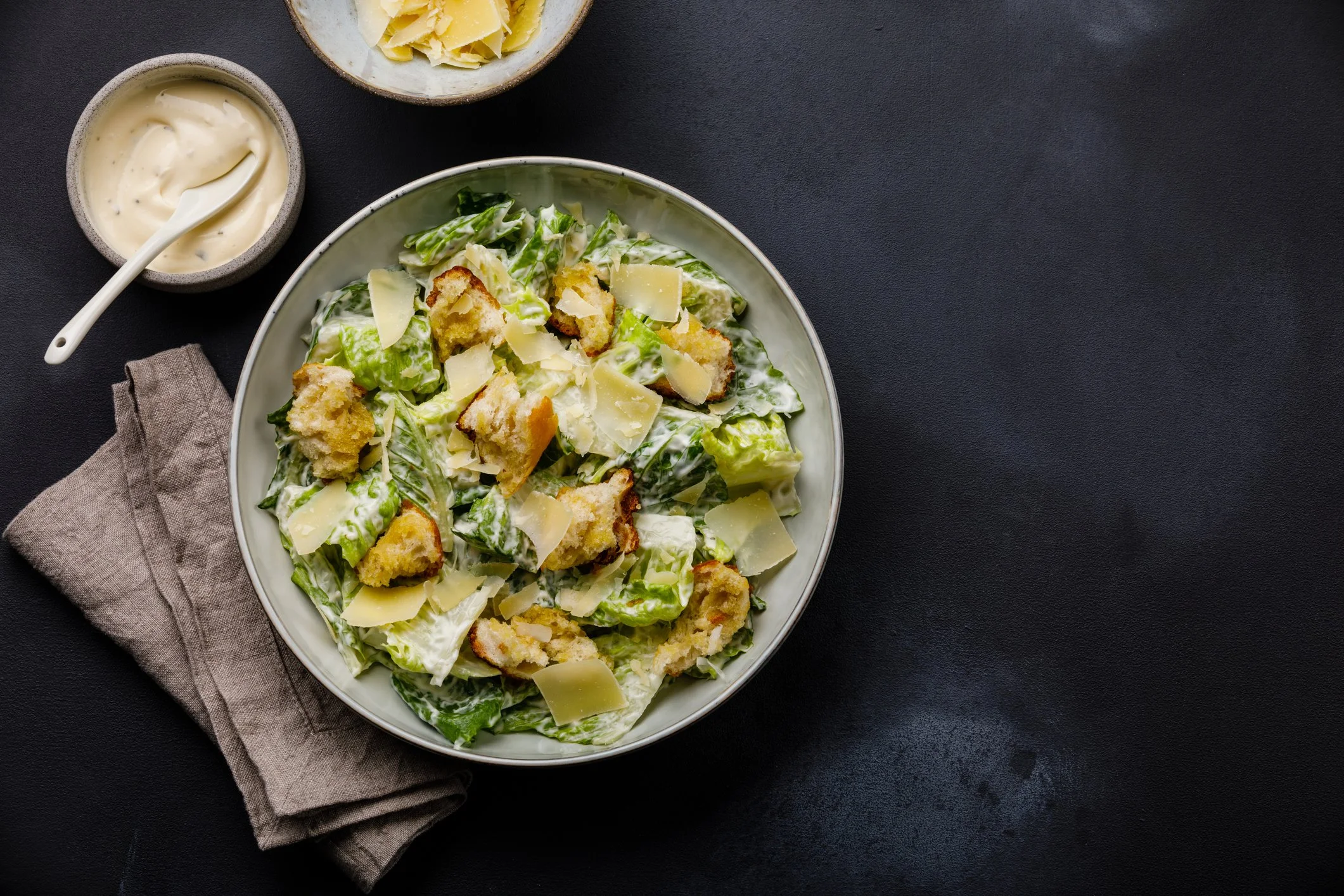
Once described by famous chef Julia Child as “a sensation of a salad from coast to coast,” and deemed “the greatest recipe to originate in the Americas in fifty years” by the International Society of Epicures in Paris in 1953, there is no doubting the longstanding success and popularity of a Caesar salad. However, the true origin and history of the famous dish is much less clear.
How Caesar Cardini Invented the Caesar Salad in 1924
The dominant, and most widely-accepted, history of the dish credits Caesar Cardini for creating the dish in Tijuana, Mexico, on July 4, 1924. Cardini initially opened a restaurant in Sacramento and then in San Diego but moved his establishment to Tijuana in the 1920s to escape Prohibition. According to folklore—and as recounted by Cardini’s daughter, Rosa, until her death in 2003—Cardini’s was doing a brisk business on Independence Day in 1924 but was running low on ingredients. Cardini threw together a salad consisting of romaine lettuce, parmesan cheese, and croutons and dressed it with a combination of olive oil, egg, garlic, parmesan cheese, lemon juice, and Worchester sauce. The salad was a hit and its popularity grew rapidly thanks to throngs of American film stars and Hollywood elite who traveled to Tijuana for banned alcohol, only to discover Caesar’s salad.
Cardini's 1948 Patent and Trademark Registrations
Cardini patented the specific recipe for the famous salad dressing in 1948 under the name “Cardini’s Original Caesar Dressing Mix,” and secured federal trademark registrations for “Caesar Cardini’s,” “Cardini’s,” and “Original Caesar Dressing” the same year. Cardini’s daughter took over the business after her father’s death in 1956 and eventually sold the company in 1988. Today, the marks for “Cardini’s” and “Caesar Cardini’s” are owned by T. Marzetti Company.
Why "Caesar's Salad" Itself Could Not Be Trademarked
Of note, Cardini was not able to secure protection for the term “Caesar’s Salad” given its fame even as early as 1948, which rendered the terms descriptive. Regardless, Cardini’s business savvy in protecting as much of the name and recipe as was possible secured the necessary protections to maintain the value and goodwill associated with his creation and ensured the longevity of the brand and financial security for subsequent generations.
For more information about trademark protection and how to secure your brand's recipe, name, or product identity, see our trademarks practice page.
Klemchuk PLLC is a leading IP law firm based in Dallas, Texas, focusing on litigation, anti-counterfeiting, trademarks, patents, and business law. Our experienced attorneys assist clients in safeguarding innovation and expanding market share through strategic investments in intellectual property.
This article is provided for informational purposes only and does not constitute legal advice. For guidance on specific legal matters under federal, state, or local laws, please consult with our IP Lawyers.
© 2026 Klemchuk PLLC | Explore our services