
Would You Let AI Arbitrate Your Dispute?
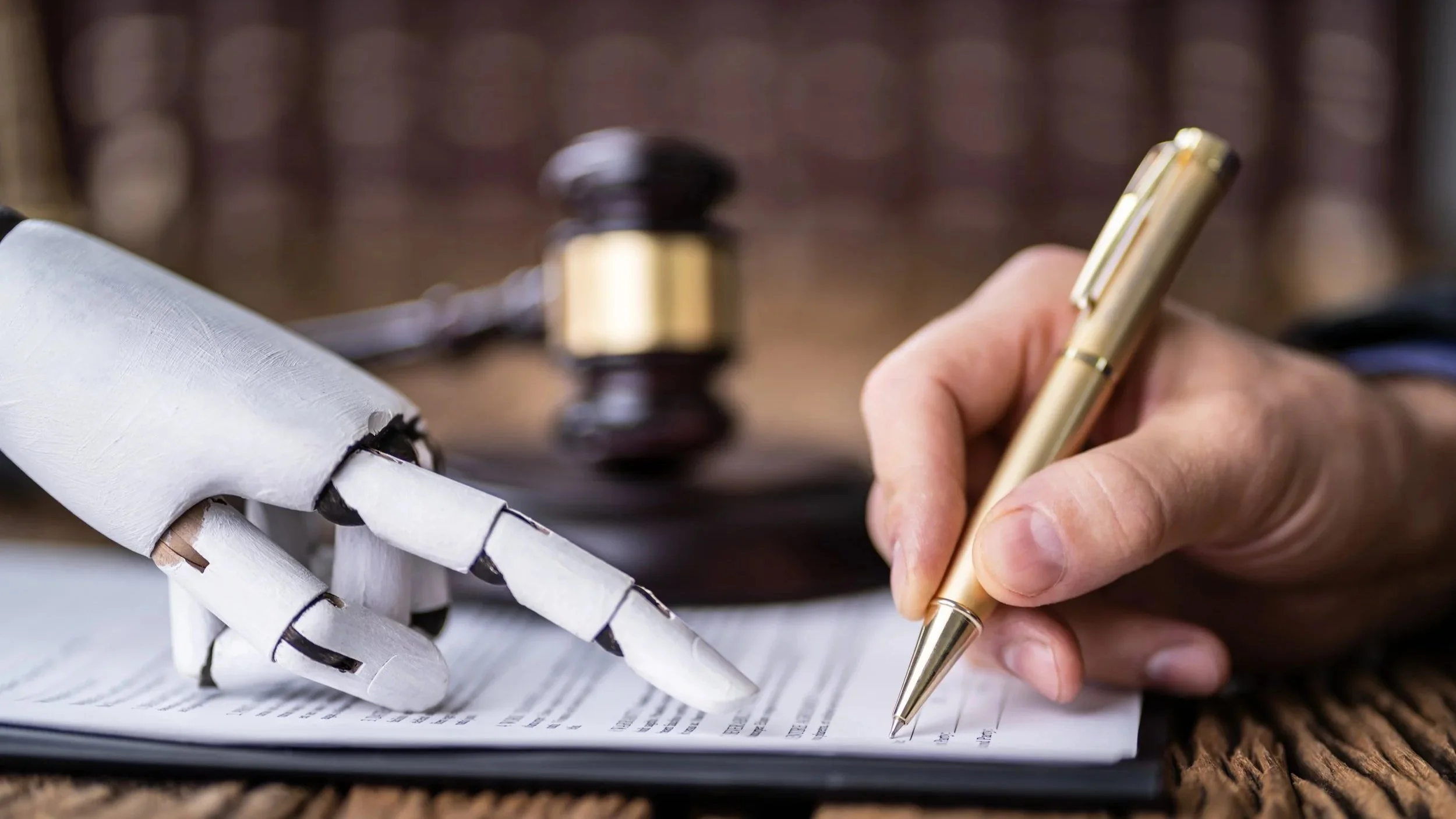
The very idea of using a machine to settle commercial disputes sounds like something out of a dystopian science fiction story. But the American Arbitration Association has recently announced its new AI arbitration tool called the “Digital Dispute Resolution Center (DDRC) platform” it created to supplement or even take over the role of a human arbitrator. Right now, this AI arbitration platform is limited to construction contract disputes that can be resolved on documents alone—that is, without any witness testimony. While the AAA has thus limited the application of AI arbitration a small subset of cases, this is more likely viewed as a pilot program that will be used to expand the concept to a larger cohort of cases in the future.
The AAA claims that the AI arbitrator is trained on actual AAA construction awards, rather than generic legal texts. They also claim that this training “reflects real arbitrator logic, providing authentic legal reasoning.” Generally, arbitrations awards are confidential, so it is not clear where these “AAA construction awards” came from, but it is probably not outrageous to assume that the AAA considers such internal use as exempt from the confidentiality of its arbitrations. This may raise some interesting intellectual property, antitrust, and ethical questions, but those issues are best left for a later a discussion.
How does it work?
Like an ordinary arbitration, the proceeding starts with a claim by the initiating party, called the “Claimant,” who must also pay the $2,500 arbitration cost which covers the administrative fees and compensation for a human Arbitrator who will oversee the AI arbitration—more on that later. Assuming the agreement to arbitrate is not disputed, once the claim is filed, the Respondent will have 10 business days to file a brief in response and assert any counterclaims it may wish to bring (along with a $2,500 counterclaim fee). After this stage, the Digital Dispute Resolution Center schedules the “Submissions” (written statements with legal authority, evidence, and exhibits), in ten day increments for the Claimant’s Submission, Respondent’s Response, and Claimant’s Reply.
These submissions, and the AI training, constitute the entire word in which the AI arbitrator will work from. After the last submission, the AI arbitrator will confirm the submissions and summarize the claims, evidence, exhibits, and legal authority. The parties will then have the opportunity, to review and comment on the AI Arbitrator’s summaries of their submissions. This is the first check on the AI system.
After this feedback stage, the AI arbitrator selects a human arbitrator from the AAA’s roster of arbitrators to hear and decide the case. The human arbitrator will make disclosures to the parties to verify their impartiality and independence and can be rejected by either of the parties. If the human arbitrator is rejected, the AI will automatically pick another, and the process repeats until the parties agree on an arbitrator.
Once the human arbitrator is selected, the AI Arbitrator prepares a draft award and can award damages, attorney’s fees, and allocate the arbitration costs. This output is reviewed by the human arbitrator who has the authority to approve, edit, or rewrite any part of the AI arbitrator’s award. Thus, the AAA claims that the award “remains the human arbitrator’s award, not the AI’s.”
However, the AAA has not yet published any firm guidance on how involved the “human arbitrator” will be, or how deeply that human will review the submissions and the award. The AAA claims that the AI’s output “is validated for logic, fairness, and legal soundness by an experienced AAA arbitrator trained in AI arbitrator oversight,” but does not elaborate any further. Obviously, this will increase the volume of arbitrations a human arbitrator can preside over—a win for the AAA. But what happens to the human arbitrator’s involvement when the high volume of arbitrations becomes routine? Will the human arbitrators who are specially trained for this platform have significant real arbitration experience? Put another way, will experienced arbitrators be grateful to spend their days parsing over AI created awards? This is an area where theory may diverge from reality.
Is the AI’s decision binding?
A key part of this program is that it is essentially voluntary. It is up to the parties to decide, at the beginning of the arbitration, if they wish the AI arbitration to be binding or merely advisory. The one cavate is that if they decide on a non-binding arbitration, they must agree that the arbitration award will not be introduced or cited as evidence at any other arbitration or proceeding.
But why would you want an advisory opinion from a machine? Parties looking for an advisory opinion would probably be better off with an experienced mediator, possibly a retired judge who could provide well-reasoned guidance based on real experience. No, the value of this platform is probably in getting a quick decision in an area of high volume low value disputes that would otherwise not be worth litigating on an individual basis. AI arbitration is currently voluntary under the AAA’s rule, but will a mandatory AI arbitration clause be enforceable in the future?
What does the future hold?
If the legal community is as skeptical as I am, then this idea will wither and die quickly because no two businesses in a dispute are likely to both want to roll the dice on a binding AI arbitration and will not see value in going through the motions and expense for an AI generated advisory opinion that cannot be introduced in court or used as evidence.
So here is a personal observation: I have been practicing law for over twenty years—mostly IP disputes, and I cannot recall a single time that both parties to a dispute wanted to arbitrate. Within the industries my practice has been familiar with, an arbitration is usually preceded by litigation and a motion to enforce an arbitration agreement. So why would parties chose to enter into a non-binding AI arbitration when one of the parties is compelling the arbitration and the other party probably does not want to arbitrate at all? It could only be a situation where both parties could agree to arbitrate, agree to an AI arbitration, and agree to end up with a non-binding advisory opinion—from a machine. This scenario assumes that that parties can agree on all of those factors, yet are not agreeable enough to just come to a settlement without having to arbitrate in the first place.
If there is a market for this kind of offering, it will be expanded to include more complicated cases with the possibility of submitting transcripts of witness testimony as evidence. Can an AI program evaluate the credibility of a witness? We shall see. Balancing the credibility and weight of evidence is tricky, but we already entrust this task to a small group of randomly selected persons in the form of a jury, so training an AI to weigh evidence and credibility might not be such a crazy concept.
Final thoughts
If a dispute is to be decided by a machine, then it will be important to understand how the machine works. How the game works. The rules may turn out to be different. We have a fairly good understanding on how to write persuasively to another human. But matters of style and formatting might make an argument more or less persuasive to an AI program. This will undoubtedly be studied. AI arbitration may become a trap the favors more well financed and sophisticated parties who have the resources to understand the game. On the other hand, it may become an efficient way to settle simple disputes in industries that have a high volume of disputes that might be too small to efficiently litigate.
We don’t have a comments section for our blog, but I would love to hear what you think about this concept. Would you recommend AI arbitration for your company? Let me know your thoughts by emailing me at: brian.casper@klemchuk.com
Klemchuk PLLC is a leading IP law firm based in Dallas, Texas, focusing on litigation, anti-counterfeiting, trademarks, patents, and business law. Our experienced attorneys assist clients in safeguarding innovation and expanding market share through strategic investments in intellectual property.
This article is provided for informational purposes only and does not constitute legal advice. For guidance on specific legal matters under federal, state, or local laws, please consult with our IP Lawyers.
© 2026 Klemchuk PLLC | Explore our services